Long-Life Bushings for Harsh Environments in Mining & Forestry
The Challenge: Why Standard Bushings Fail
Mining and forestry equipment operate in some of the most unforgiving conditions imaginable. From abrasive dust and constant shock loads to extreme temperatures and corrosive contaminants, every component must withstand relentless punishment. For bushings, failure is not an option—downtime costs are measured in thousands per hour, and safety risks are real. This is where selecting the right bushing technology becomes a critical engineering decision.
The Challenge: Why Standard Bushings Fail
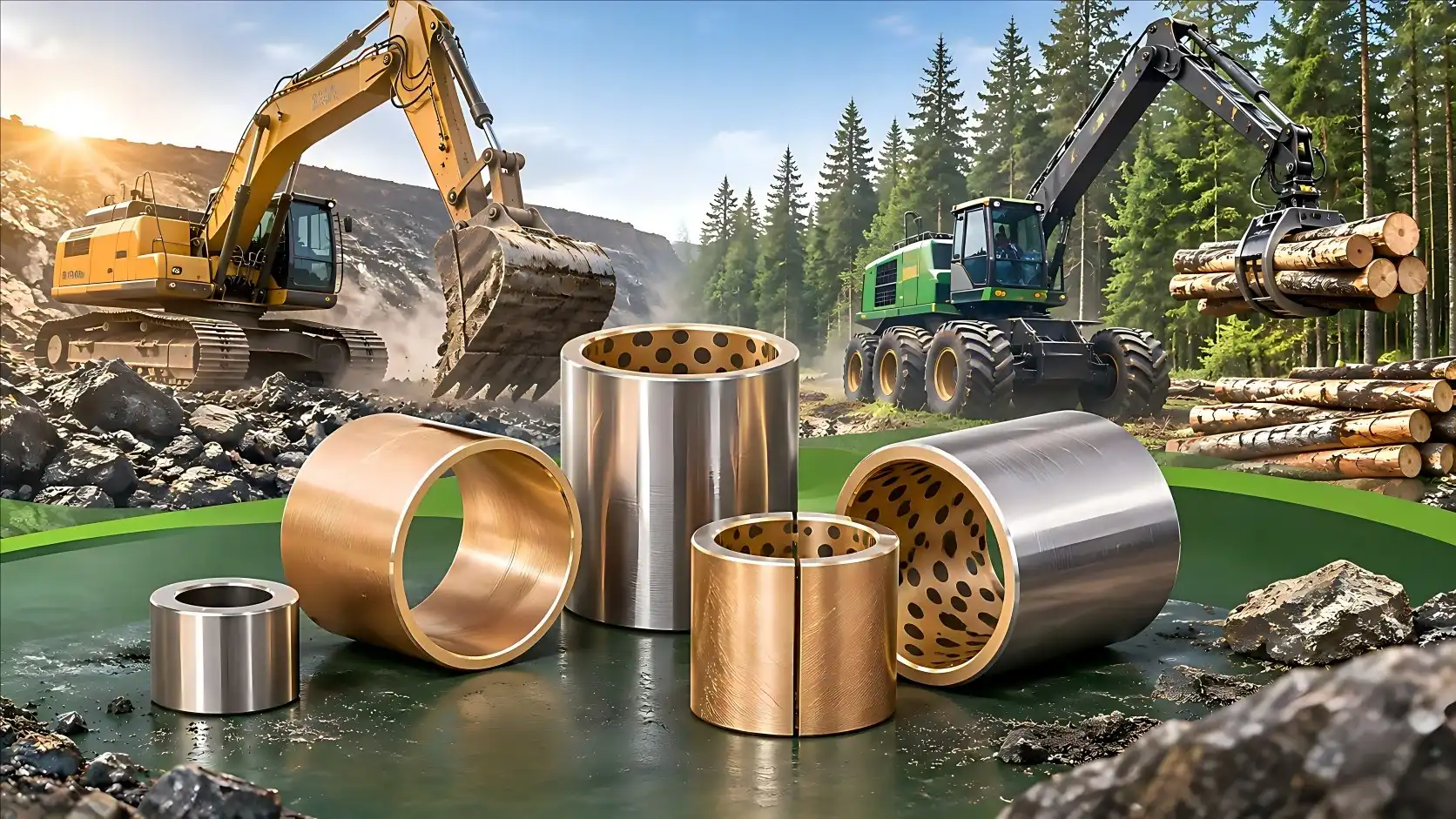
In mining, equipment like excavators, loaders, and drilling rigs face high static and dynamic loads combined with continuous vibration and particulate contamination. Forestry machines—harvesters, forwarders, and skidders—add their own complications: exposure to moisture, acids from wood, and extreme temperature swings. Standard bronze bushings, while offering good conformability, can deform under high shock cycles and accelerate wear when lubrication intervals are stretched .
The consequences are predictable: increased clearance, shaft damage, unplanned maintenance, and shortened component life. The solution lies in bushings engineered specifically for these conditions.
What Makes a Bushing “Long-Life” in Harsh Environments?
Several factors determine bushing performance in mining and forestry applications:
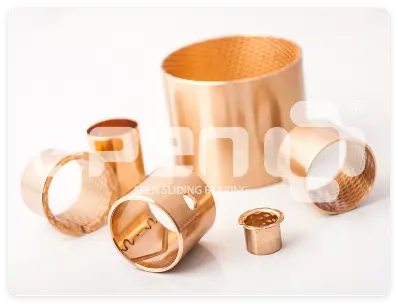
Load Capacity and Wear Resistance. Bushings must maintain integrity under pressures that would deform lesser materials. Advanced metallic bushings with specialized surface treatments can handle dynamic pressures up to 250 MPa while resisting seizure and abrasion . For applications requiring self-lubrication, bronze wrapped bushings with diamond indentations or stamped oil grooves provide reliable performance in dirty environments where re-lubrication is difficult .
Corrosion and Contamination Resistance. Mining and forestry environments expose components to water, chemicals, and abrasive particles. Bushings with proper material composition and surface engineering resist corrosion while maintaining sliding properties. Self-lubricating designs that release lubricant from embedded pockets help flush contaminants away from the bearing surface.
Extended Lubrication Intervals. Maintenance access in the field is costly and sometimes dangerous. Bushings that extend lubrication intervals—in some cases up to 1,000 hours—dramatically reduce service demands . This is achieved through advanced tribological layers and optimized surface topography that retain and distribute lubricant more effectively.
Temperature Tolerance. From freezing conditions in northern forests to the heat generated by continuous operation in deep mines, bushings must perform across a wide thermal range. Quality bushings operate reliably from -40°C to 250°C, maintaining dimensional stability and material properties .
Application-Specific Considerations
For mining equipment, the priority is often load capacity and resistance to shock and abrasion. Excavator bucket pins, boom pivots, and undercarriage components benefit from bushings that can absorb impact without deformation. Bronze wrapped bushings with lubrication pockets have proven effective in mining machinery where shock loads and vibration occur .
In forestry, the combination of moisture and contaminants requires bushings that resist corrosion while maintaining reliable sliding performance. Harvesting heads and grapple components face constant exposure to sap, dirt, and varying temperatures. Self-lubricating bronze bushings with good anti-corrosion properties are well-suited to these conditions .
Specifying for Reliability
When selecting bushings for harsh-environment mining and forestry applications, engineers should consider:
Shaft requirements: Optimal performance typically requires shaft hardness above 56 HRC and surface roughness below Ra 0.8 μm .
Housing tolerances: Standard H7 housing bores with proper installation procedures ensure correct fit and load distribution.
Lubrication strategy: Whether grease-lubricated or self-lubricating, the bushing design must match the maintenance regime achievable in the field.
Material compatibility: Matching bushing and shaft materials prevents galling and ensures predictable wear patterns.
Conclusion
In mining and forestry, long-life bushings are more cost-effective than comparing the costs of individual parts. In real life, bearing failures lead to a chain of costs, including fast shipping of new parts, higher labour rates for emergency repairs, and lost income from equipment that isn't being used during busy production times. New bearing technologies that use bimetallic structures, self-lubricating composites, and designed bronze alloys directly deal with the reasons why things break down too soon in tough settings. If procurement teams take the time to learn about the basics of material science, as well as installation requirements and maintenance procedures, their companies will be better able to get the most out of these parts, which include longer service lives and more reliable equipment.
FAQ
1. What is the expected service life of long-life bushings in mining applications?
Service life varies on how much weight is on it, how dirty it is, and what kind of material is used. When used properly, bimetallic long-life bushings in mining crushers can last between 10,000 and 15,000 hours. Self-lubricating composite designs may last more than 20,000 hours in better settings, such as on conveyor idlers. These numbers drop by 30 to 50 percent in harsh settings where abrasive powder is always present.
2. Can I use standard grease with self-lubricating bushings?
Putting grease on hinges that already have grease on them doesn't help. Solid lubricants that are embedded in the porous surface can't move to the sliding interface because the grease seals it. This leads to burning and faster wear. As designed, these designs work best when the conditions are dry.
3. Are custom-engineered bushings available for specialized forestry equipment?
Custom bushings are made by companies like Jiashan Epen Bearing Co., Ltd. to fit the needs of specific machines. Custom solutions are made to fit specific size limitations, load profiles, or needs for environmental resistance. Depending on how complicated it is, lead times are usually between 6 and 10 weeks.
4. How do I identify when a bushing needs replacement before failure occurs?
Some visible signs are backing material that is showing, surface cracks, or changes in size that cause too much space. Unusual vibrations, rising temperatures, or strange noises during equipment cycles are all signs of an operational problem. By doing regular dimensional checks as part of predictive maintenance, major breakdowns can be avoided.
Partner with Epen for Superior Long-Life Bushing Solutions
For equipment to work reliably in harsh mining and forestry settings, the long-life bushings must be made to handle the circumstances. Jiashan Epen Bearing Co., Ltd. makes bronze, metal-polymer hybrid, and bimetallic bushings that are meant to last longer between repairs and cost less overall. Our engineering team works together with mechanical engineers and sourcing experts to find the best bearing options for your specific needs. In addition to keeping a large stock of regular catalogue sizes, we also offer custom-engineered designs for specific machinery uses. As a long-term bushing manufacturer with years of experience working with construction equipment, mines, and forestry contractors around the world, we know how important it is to find the right balance between durability and cost-effectiveness. Get in touch with our technical experts at epen@cnepen.cn to talk about your unique needs and get access to full material specifications that will help you make smart purchasing decisions.
References
1. Budynas, R.G. and Nisbett, J.K. (2020). Shigley's Mechanical Engineering Design, 11th Edition. McGraw-Hill Education, New York.
2. Khonsari, M.M. and Booser, E.R. (2017). Applied Tribology: Bearing Design and Lubrication, 3rd Edition. John Wiley & Sons, Hoboken.
3. American Society for Testing and Materials (2019). ASTM B438-19: Standard Specification for Sintered Bronze Structural Parts. ASTM International, West Conshohocken.
4. Garland, N. and Hadfield, M. (2018). "Environmental Degradation of Industrial Sliding Bearings in Mining Applications." Tribology International, Volume 127, pp. 456-469.
5. Society of Automotive Engineers (2021). SAE J459: Spherical and Flanged Sleeve (Plain) Bushings. SAE International, Warrendale.
6. Neale, M.J. (2020). The Tribology Handbook, 2nd Edition. Butterworth-Heinemann, Oxford.

Dr. Eleanor "Ellie" Penn
Dr. Eleanor "Ellie" Penn is our Senior Tribology Specialist at Epen, where she bridges the gap between deep material science and real-world engineering challenges. With over 15 years of experience in the field of sliding bearings and self-lubricating materials, she possesses a passion for solving the most complex problems of friction, wear, and maintenance. Ellie holds a Ph.D. in Mechanical Engineering with a focus on tribology. Her mission is to empower engineers and maintenance professionals with practical knowledge and best practices that extend equipment life, reduce downtime, and drive innovation. When she's not in the lab or writing, you can find her volunteering at STEM workshops to inspire the next generation of engineers. Areas of Expertise: Sliding Bearing Design, Material Selection, Failure Analysis, Preventive Maintenance, Application Engineering.
Contact to EPEN Bearing
If you have any questions please do not hesitate to call or write us.