Understanding Load Capacity: A Technical Guide to E20 Bushings
EPEN E20 bushing Material Characteristics
- EPEN E20 bushing Material Characteristics
- EPEN E20 Brief Description
- EPEN E20 Features
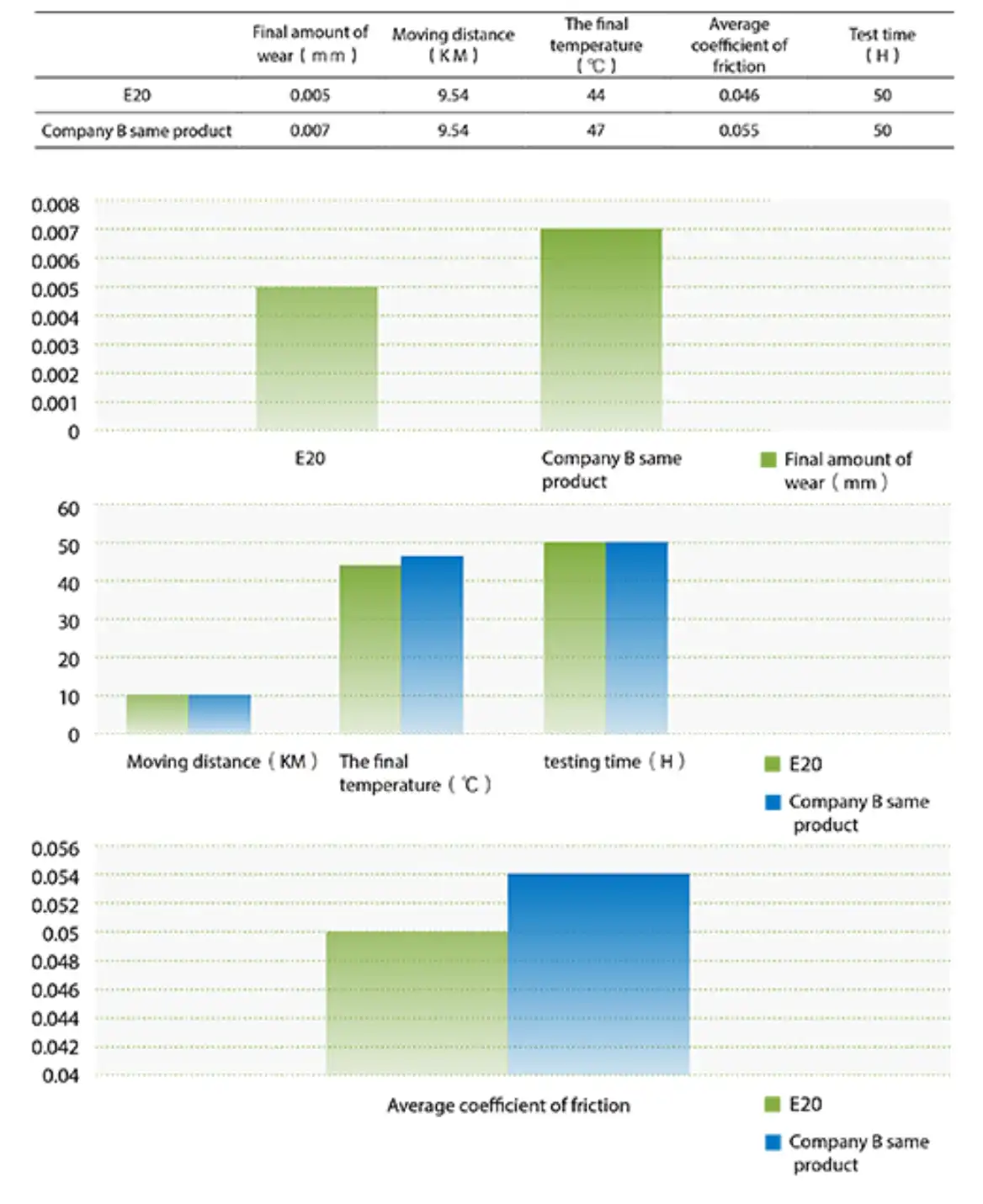
- EPEN E20 Test Result
- Comparing E20 Bushings with Other Similar Models and Alternatives
- Procurement and Installation Guide for E20 Bushings
- Performance Optimization and Reliability of E20 Bushings
- Conclusion
- FAQ
- Partner with Epen for Reliable E20 Bushing Solutions
- References
This guide provides a technical overview of E20 bushings, with a primary focus on understanding their load capacity—the maximum load a bushing can support under specified operating conditions. While "E20" can refer to different bearing types across various manufacturers, this guide covers the most common E20 bushing variants and their key load-related specifications.
When sourcing components for heavy machinery or industrial equipment, understanding load capacity becomes critical to preventing downtime and reducing maintenance costs. The E20 bushing represents a foundational bearing element used across construction equipment, mining machinery, and industrial automation systems. These cylindrical components facilitate smooth motion between moving parts while distributing forces that would otherwise cause premature wear or catastrophic failure. Whether you're managing an excavator fleet or overseeing a packaging line, knowing how E20 bushings handle load determines whether your equipment operates reliably or experiences unexpected breakdowns that disrupt production schedules and inflate operating expenses.
EPEN E20 bushing Material Characteristics
| max. P | dry | dynamic | N/mm 2 | 24.5 |
| geschmiert | 49 | |||
| - | static | 73.5 | ||
| max. v | dry | m/s | 0.5 | |
| geschmiert | 1 | |||
| PV. max | dry | N/mm2. m/s | 1.63 | |
| geschmiert | 2.45 | |||
| service temperature range | °C | -40~+400 | ||
| Density | kg/dm 3 | 6.3 | ||
| Tensile strength | N/mm2 | >400 | ||
| Hardness | HRM | 60 μ -95 μ | ||
EPEN E20 Brief Description
E-20 is bimetallic bearing material, based on steel backing, and a layer of copper sinter, which is composed of special copper powder with solid lubricants (major ingredient is graphite) dispersed, acts as wear resistant surface and processed through oil-impregnating treatment.
EPEN E20 Features
● Freedom of motions to any direction due to solid lubricant dispersed evenly, with high performance even for very small motions.
● Applicable in self-lub state.
● Outstanding load durability, velocity characteristics and wear resistance.
● Available of standard products with various sizes and plates for additional machining.
EPEN E20 Test Result
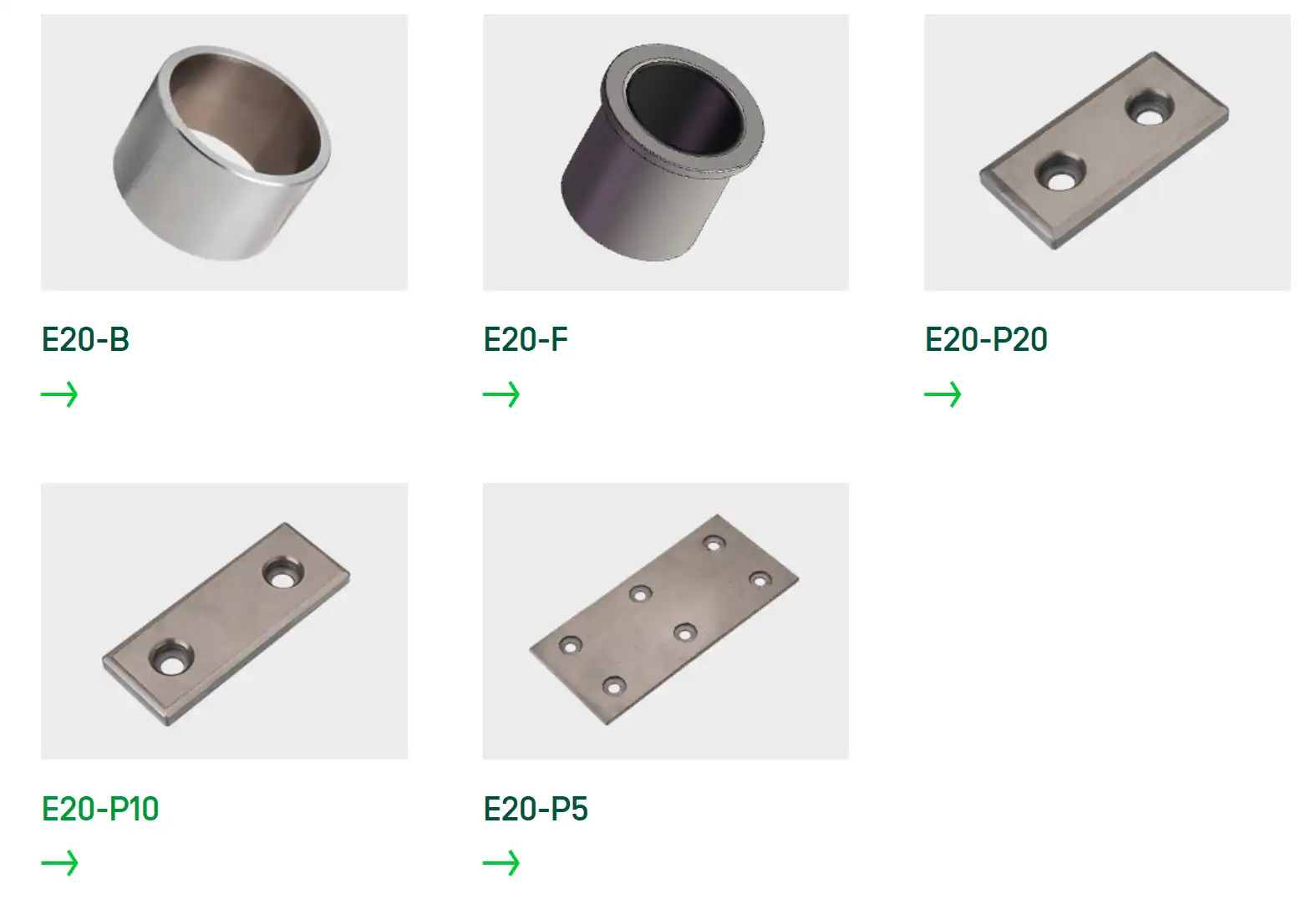
EPEN Bearings Size
Understanding Load Capacity and How E20 Bushings Work
The maximum force that a bushing can handle before it wears out, deforms, or breaks is called its load capacity. This success trait isn't based on a single rate number but on a number of factors that work together.
Radial and Axial Load Distribution
Radial loads push the bearing wall against the shaft in a way that is not parallel to the bushing's axis. In pivot points and rotating uses, these forces are the most important. On the other hand, axial loads push in a straight line along the shaft axis, causing pushing forces that need to be handled by special shoulder designs. Most E20 bushings can only handle radial loads and not much axial load unless they are specially made with flanges or thrust surfaces.
The pressure-velocity (PV) value is a useful way to figure out if something is right. In this math problem, the slide speed (m/s) is multiplied by the specific load (pressure in N/mm²). Bronze oil bushings can usually handle up to 1.8 N/mm²·m/s of PV, but self-lubricating composites can handle up to 3.5 N/mm²·m/s. When these limits are crossed, more heat is produced than the bearing can get rid of, which damages the lubricants and speeds up wear.
Static Versus Dynamic Load Ratings
When the bushing supports weight without turning all the time, like when a crane boom is at rest, this is called static load capacity. This limit is set by the crushing strength of the object. Bronze can handle 200–280 N/mm² before it permanently deforms. Dynamic load rates are used in situations where things like the type of grease and the finish of the surface become very important.
When the shaft and bushing turn, oil is pushed into the gap between them, making a hydrodynamic wedge. This thin layer of fluid keeps the surfaces from touching, which greatly reduces wear and friction. For this protected layer to form, there must be enough oil and the right amount of space between things. When starting up or under heavy loads, boundary lubrication conditions happen when metals touch even though there is a lube present. This is why choosing the right materials and treating the surfaces are so important for keeping things from scuffing.
Design Features That Enhance Load Management
The bushing bore has lubrication grooves that make it easier for oil to spread across the contact zone. These pathways stop localised hunger, which could lead to hot spots and failure before it's time. But too much cutting lowers the load-bearing area, so the design needs to be adjusted based on how it will be used.
Surface treatments, such as phosphating or special coatings, make it easier for the parts to break in at first and offer short-term safety during times of low lubrication. Edge loading, which puts stress in small areas instead of spreading it out evenly, can't happen with chamfers and lead-ins because they make installation easier.
Clearance requirements have a direct effect on load capacity. Not enough space stops the fluid film from forming and raises the friction heat. When there is too much clearance, the shaft can wobble, which causes impact loading and uneven wear patterns. Manufacturers give clearance ranges based on the diameter of the shaft and the speed at which it works. For E20-size bushings, the typical range is from 0.05mm to 0.15mm.
Comparing E20 Bushings with Other Similar Models and Alternatives
Knowing how E20 bushings connect to nearby sizes and different types of bearings helps sourcing professionals choose the best parts.
Dimensional Variants: E18 and E22 Comparisons
The E18 bushing has slightly smaller measurements than the other types. This means it can't hold as much weight, but it can be useful in situations where weight is important or where room is limited for a larger bearing housing. A standard E20 configuration can handle 40 N/mm² of dynamic loads, but an E18 variant might only be able to handle 30 N/mm². This difference is important when building small machines because each millimeter changes the total size of the machine.
On the other hand, E22 bushings can hold more weight because their walls are thicker and their contact areas are bigger. This size is good for heavy mining or construction equipment that has to deal with forces that are often higher than what smaller bearings can handle. The trade-off is more weight and a bigger housing, which may not be worth it in situations where the extra capacity is already well within the E20 load limits.
Material-Specific Performance Comparisons
In general industrial settings, bronze bushings are reliable and don't cost a lot of money. Their ability to be machined lets you make custom changes, and the naturally lubricious nature of the material ensures good performance even when maintenance isn't done perfectly. The problem shows up in places that are very acidic or when the machine needs to work for a long time without being oiled again.
Even though they cost more at first, stainless steel bushings don't need to be maintained because they don't rust in marine or chemical processing environments. Their hardness makes them better at resisting wear from harsh contamination, but it also makes them less forgiving when the shaft isn't lined up right or when fitting goes wrong. These bushings are good for situations where the total cost of ownership makes it worth paying more up front.
Bronze composites that lubricate themselves fill in the gap between standard oil-soaked bushings and solutions that don't need any upkeep. The porous matrix stores oil stocks that slowly leak out during use, greatly extending the time between service intervals. This technology is useful for farming equipment that works in dirty areas where re-lubrication isn't possible very often or for food processing equipment where applying oil from the outside could contaminate the food.
Alternative Bearing Technologies
Rolling element bearings have less friction and can go faster, but they don't work well in dirty places where particles can damage the precision raceways. When things are clean, a ball bearing might have 50% less friction than a plain bushing. But when they are exposed to the grit that is common in mine or buildings, they break down quickly.
Composite polymer bushings keep metals from touching each other, which protects against chemicals and keeps electricity from flowing. These materials can handle being out of alignment better than bronze, but they can't hold as much weight as big machinery main pivots. They work well in places where mild forces meet harsh environmental conditions, like in farming equipment links or conveyor idler supports.
Procurement and Installation Guide for E20 Bushings
To successfully find and install E20 bushings, you need to pay attention to what the suppliers can do, how prices change, and how to install them in a way that keeps the performance traits that were meant for them.
Navigating the Supplier Landscape
Many companies around the world keep huge catalogues of standard bushing sizes. For tough jobs, companies like NSK, THK, and Schaeffler offer precision-ground options. These well-known names offer detailed technical documentation and engineering support, which is helpful when creating new tools or fixing problems with existing ones. Because of this support infrastructure and consistent quality, their prices are fair, making them good for OEM uses where failures in the field can put the warranty at risk in a big way.
For large orders, regional suppliers and specialised bearing manufacturers can often offer competitive prices, and the quality is usually good enough for less important uses. Lead times change with the seasons. Purchasing teams say that normal bronze bushings can be delivered in 4 to 6 weeks, but it can take 10 to 12 weeks for special materials or custom sizes. By planning repair plans around these dates, you can avoid having to pay for emergency airfreight, which can make the cost of parts many times higher.
In most volume pricing structures, discounts are given after 100, 500, or 1,000 pieces. Consolidated ordering, which takes advantage of these discounts while keeping inventory levels reasonable, is helpful for maintenance managers who take care of fleets of equipment. Just-in-time shipping agreements with dependable providers find a mix between saving money on costs and the costs of keeping inventory on hand.
Installation Best Practices for Optimal Performance
Before installing something correctly, the housing bores and shafts need to be cleaned thoroughly. Any protective coats, grit, or rust that could get in the way of a good fit need to be removed. It is important to check the housings for roundness and surface finish, since bores that aren't round cause uneven load distribution no matter how good the bushings are.
For press-fitting to work, the force must be carefully applied and lined up with the bushing axis to keep the thin-walled structure from cocking or getting damaged. The most reliable machines are hydraulic presses with alignment tools, but for smaller joints, careful arbour press work is enough. Most interference fits are between 0.02mm and 0.08mm, which ensures a solid fit without putting too much stress on the fitting process.
By lubricating the bushings before putting them together, you can avoid the dry contact that leads to break-in wear. Bronze bushings that have been soaked in oil should never be machined after they have been installed because the cutting tools spread material across the pores, blocking the flow of lubricant. Any changes to the sizes must be made before pressing the parts together.
The shine on the shaft has a direct effect on the life of the bushings. Roughness values should stay below Ra 0.8μm, and shafts made of harder materials will last longer and keep clearances from getting bigger over time. Differences in hardness of at least 50 HRC points between the shaft and the bushing make sure that the wear is on the changeable part and not the more expensive shaft.
Maintenance Protocols That Extend Service Life
Setting lubrication plans based on working hours instead of date time takes into account how much the machine is actually used. When the conditions are good, machines can go longer between checks, but when they're in a dusty or hot place, they need to be checked more often. Visual inspection during regular maintenance finds early signs of wear, like axial play, discolouration from overheating, or bronze particles in drained lubricant, before the part fails completely.
Controlling contamination turns out to be just as important as greasing. Seals and covers that protect bearing areas work well because they keep out gritty particles that would wear down metal surfaces quickly. During servicing, maintenance procedures should make sure that contaminants aren't introduced by using clean tools and new lubricants instead of supplies that have been used in the shop.
Performance Optimization and Reliability of E20 Bushings
To get the best performance out of an E20 bushing, you need to deal with common failure modes and use recent advances in material science to make design improvements.
Identifying and Resolving Common Performance Limitations
Lack of lubrication is often the cause of early wear, which can be caused by longer service intervals, low oil levels in self-lubricating types, or distribution gaps that are blocked. Using thermal imaging during operation can show hot spots that mean there is localised hunger. This helps with fixing the problem before it gets worse. Problems with lubrication can be fixed by using lubricants with a higher thickness or switching to composite materials that have solid lubricants built in.
When the shaft and housing are not lined up correctly, the edges are loaded heavily, which wears away material quickly. This condition usually happens because of bad installation or structural deformation from service loads. Fixing problems with alignment or choosing bushings with higher length-to-diameter ratios spreads loads more evenly and can handle small alignment errors without affecting performance.
Bronze bushings that are in salt water or where water poisoning gets to the bearing surfaces will rust. Regular checks for dezincification—a type of rust that takes zinc from a metal but leaves behind porous, weak copper—allow replacement before it fails suddenly. This problem can be solved by switching to corrosion-resistant stainless steel or using protective coats on sites that have this problem all the time.
Emerging Technologies and Future Developments
Laser texturing and other advanced surface engineering methods create tiny pockets that help lube stay in place and spread out better. While these treatments increase load capacity by 15–20% and lengthen the time between maintenance checks, they are currently more expensive and can only be used on high-end equipment lines.
Hybrid materials have metal backings and designed polymer bearing surfaces. They have the power of regular bushings and the low-friction, low-maintenance properties of plastics. These solutions work well in clean rooms or on equipment that needs to be completely free of lubricant contamination. However, they still have lower maximum temperatures and loads than all-metal designs.
Condition tracking systems with built-in sensors keep an eye on things like temperature, sound, and even the production of wear particles in real time. While these technologies are still just starting to make their way out of research labs and into the real world, they offer predictive maintenance tools that can replace parts based on their actual state instead of safe intervals of time.
Conclusion
To understand the load capacity of an E20 bushing, you need to do more than just read the specifications. You also need to understand how the properties of the material, the design features, the quality of the installation, and the maintenance practices all work together to provide reliable performance. For general use, bronze metals are a cost-effective option, while specialised materials are used in harsh conditions where regular bearings would break down quickly. Making sure the dimensions are correct is important for compatibility, and installing things carefully keeps the clearances and lubrication paths that were planned. Regular maintenance extends the life of a system, and paying attention to its operating conditions and wear indicators keeps it from breaking down when you least expect it. Procurement teams and maintenance managers can improve both the efficiency of equipment and the total cost of ownership by choosing bushings based on how it will be used instead of just picking ones from a catalogue.
FAQ
1. How do I determine if an E20 bushing suits my specific machinery application?
To find out if a material is suitable, you need to figure out its PV value by adding up its working loads and speeds and then comparing it to the manufacturer's ratings for that material. Self-lubricating composites are better for environments with dirt or that aren't always clean, while bronze bushings can handle moderate loads and need to be oiled all the time. Talking to experts on bearings can help you think about things like high temperatures or chemical exposure that might not be taken into account by normal estimates.
2. What maintenance schedule maximizes E20 bushing service life?
How often you need to lubricate depends on how hard you work and where you work. In clean conditions, machines that are used continuously may go longer than 500 hours between inspections. Machines that are used in harsh dust or high temperatures, on the other hand, need to be inspected every 100 to 200 hours. Watching for more space, strange noises, or heat production can help find problems early on, before they become totally broken.
3. How does E20 bushing load capacity compare to rolling element bearings?
When shock loads and dirt get into the bushings, they work better than ball or roller bearings. In ideal conditions, rolling element designs have less friction, but bushings are more reliable in the harsh conditions that are common in building, mining, and farming tools. The comparison isn't so much about the exact capacity as it is about which type of E20 bushing works best in real-world situations.
Partner with Epen for Reliable E20 Bushing Solutions
At Jiashan Epen Bearing Co., Ltd., our engineering team knows that picking the right bushing is more than just making sure the dimensions on a drawing match. We make E20 bushings and custom bearing solutions that are made to meet the exact needs of heavy-duty building, mining, and industrial control systems. Our production skills give your equipment the performance it needs, whether you need bronze alloys for low-cost dependability, bimetallic designs for heavy shock loads, or self-lubricating composites for places where servicing is hard to come by. We have been a supplier of E20 bushings for a long time, and we work with both OEM manufacturers and maintenance shops. We offer competitive lead times and technical support that lasts after the sale. Email our team at epen@cnepen.cn to talk about your unique load needs and operating conditions, and we'll come up with answers based on our decades of experience making plain bearings.
References
1. Neale, M.J. (2001). The Tribology Handbook, 2nd Edition. Butterworth-Heinemann, Oxford.
2. Khonsari, M.M. and Booser, E.R. (2008). Applied Tribology: Bearing Design and Lubrication, 2nd Edition. John Wiley & Sons, Chichester.
3. Bhushan, B. (2013). Principles and Applications of Tribology, 2nd Edition. John Wiley & Sons, New York.
4. Budynas, R.G. and Nisbett, J.K. (2015). Shigley's Mechanical Engineering Design, 10th Edition. McGraw-Hill Education, New York.
5. Stachowiak, G.W. and Batchelor, A.W. (2014). Engineering Tribology, 4th Edition. Butterworth-Heinemann, Oxford.
6. ASM International Handbook Committee (1995). ASM Handbook Volume 18: Friction, Lubrication, and Wear Technology. ASM International, Materials Park, Ohio.

Dr. Eleanor "Ellie" Penn
Dr. Eleanor "Ellie" Penn is our Senior Tribology Specialist at Epen, where she bridges the gap between deep material science and real-world engineering challenges. With over 15 years of experience in the field of sliding bearings and self-lubricating materials, she possesses a passion for solving the most complex problems of friction, wear, and maintenance. Ellie holds a Ph.D. in Mechanical Engineering with a focus on tribology. Her mission is to empower engineers and maintenance professionals with practical knowledge and best practices that extend equipment life, reduce downtime, and drive innovation. When she's not in the lab or writing, you can find her volunteering at STEM workshops to inspire the next generation of engineers. Areas of Expertise: Sliding Bearing Design, Material Selection, Failure Analysis, Preventive Maintenance, Application Engineering.
Contact to EPEN Bearing
If you have any questions please do not hesitate to call or write us.